Top 10 Benefits of Using Titanium Billet for Manufacturing?
Titanium Billet has emerged as a game-changer in the manufacturing sector. Its unique properties make it a preferred choice for various applications. The lightweight nature of titanium, combined with its high strength, offers significant advantages in multiple industries. Producers increasingly turn to Titanium Billet for its reliability and performance.
In industries like aerospace and medical, precision is critical. Titanium Billet allows for tight tolerances and reduced waste. This not only saves time but also cuts operational costs. Additionally, titanium's corrosion resistance enhances product longevity. Such qualities ensure that manufacturers can meet stringent standards without compromising quality.
However, it’s essential to consider some challenges. The initial cost of Titanium Billet can be higher than alternative materials. Businesses must weigh the upfront expenses against long-term benefits. Investing in this material often pays off, yet it requires careful consideration. Balancing cost and performance remains an ongoing discussion in the manufacturing community.
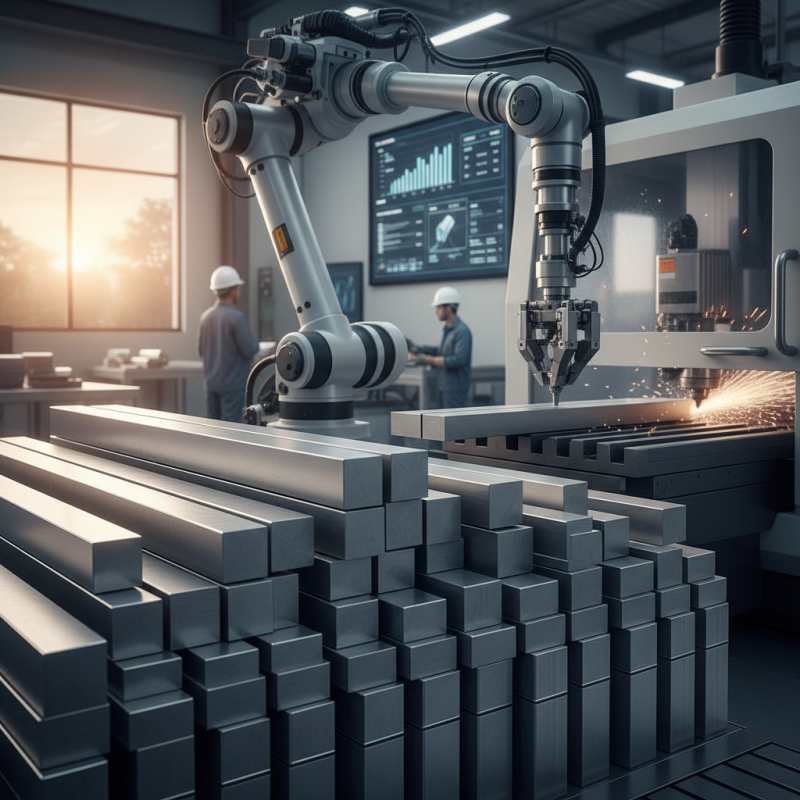
Benefits of High Strength-to-Weight Ratio of Titanium Billet
Titanium billet is gaining popularity in manufacturing, particularly due to its impressive strength-to-weight ratio. This unique property makes titanium an ideal choice in industries such as aerospace, automotive, and medical device manufacturing. Reports indicate that titanium's strength-to-weight ratio is about 3.5 times greater than that of aluminum and nearly six times better than steel. Such a lightweight material reduces overall production weight while maintaining strength, enhancing efficiency in performance-driven applications.
When using titanium billet, manufacturers can achieve parts that are both durable and lightweight. This feature particularly benefits the aerospace sector, where every ounce counts. Components made from titanium seamlessly reduce fuel consumption and improve load capacities. However, working with titanium can present challenges, including high machining costs. Manufacturers need to invest in specialized tools and techniques to shape titanium effectively, which may lead to longer production times.
**Tip:** Proper cooling and lubrication during machining can minimize tool wear.
Furthermore, titanium’s excellent corrosion resistance adds to its appeal. It withstands extreme environments that would damage other materials. However, the high cost of titanium is a point of concern. Companies must weigh the upfront investment against the long-term benefits of durability and performance.
**Tip:** Conduct a cost-benefit analysis before committing to titanium in your projects.
Top 10 Benefits of Using Titanium Billet for Manufacturing
| Benefit | Description | Application Areas |
| High Strength | Titanium billets exhibit exceptional tensile strength, allowing for durable products. | Aerospace, automotive, medical devices |
| Lightweight | Lower weight compared to steel, aiding in weight reduction for products. | Aircraft components, sports equipment |
| Corrosion Resistance | Resistant to rust and corrosion, extending product lifespan. | Marine applications, chemical processing |
| Biocompatibility | Non-toxic and compatible with human tissue, ideal for medical implants. | Surgical implants, dental applications |
| Versatile Fabrication | Can be machined, welded, and formed, allowing for diverse shapes and sizes. | Custom parts, prototypes |
| Thermal Stability | Maintains strength at high temperatures, suitable for demanding environments. | Aerospace engines, high-temperature tooling |
| Low Thermal Expansion | Minimizes deformation under temperature changes, ensuring precision. | Precision instruments, aerospace components |
| High Fatigue Resistance | Offers excellent performance under cyclic loading, reducing failure rates. | Mechanical components, structural parts |
| Aesthetic Appeal | Natural metallic finish provides an attractive appearance for consumer goods. | Luxury items, jewelry |
Enhanced Corrosion Resistance in Various Environments
Titanium billet is known for its remarkable corrosion resistance. This property makes it suitable for various environments, including marine and chemical settings. Unlike many metals, titanium resists oxidation and degradation caused by harsh conditions. It withstands saltwater, acids, and high temperatures. This durability is crucial in industries such as aerospace and medical devices.
In practical applications, titanium components are often preferred. For instance, in the marine industry, components can last longer without degradation. This increases safety and lowers costs over time. However, it’s essential to note that while titanium is resistant, it isn't completely immune to all forms of corrosion. Certain environments, like those with extreme pH levels, may still pose challenges. Manufacturers must conduct tests to ensure the right material choices.
Opinions vary regarding the best applications for titanium. Some experts emphasize its strength-to-weight ratio rather than just corrosion resistance. Others argue that its cost can be a barrier for smaller projects. These discussions highlight the need for careful consideration in materials choices, balancing both performance and budget. Effective corrosion management remains critical for achieving long-term success in manufacturing.
Superior Machinability and Precision in Manufacturing Processes
Titanium billet is gaining popularity in manufacturing due to its superior machinability and precision. The unique properties of titanium allow for cutting tools to perform better than with other metals. According to industry reports, titanium can decrease machining times by up to 30%. This efficiency is critical when precision is paramount in aerospace and medical applications.
It is essential to consider tooling and cutting parameters when working with titanium. While it is easier to machine than other metals, care must still be taken. A dull tool can lead to poor surface finish and wasted material. Regularly inspect and replace tools to maintain quality.
Using titanium allows for tighter tolerances in machined parts. This is especially beneficial in high-performance sectors, where even a small deviation can have significant consequences. A report from the American Machining Association highlights that parts made from titanium exhibit higher repeatability in manufacturing processes.
Tips: Use appropriate cooling methods during machining to prevent overheating. This enhances tool life and part quality. Implementing a robust quality control system can help identify issues early. Regular training for operators ensures they stay updated on best practices.
Increased Durability and Longevity of Manufactured Products
Titanium billet is gaining popularity in various manufacturing sectors. Its unique properties contribute greatly to the durability and longevity of products. When used in production, titanium's resistance to corrosion and wear enables items to withstand harsh environments. This feature is particularly beneficial for aerospace and medical applications, where reliability is critical.
One interesting aspect is that while titanium is lightweight, it maintains significant strength. This balance allows for creating designs that are both sturdy and efficient. By employing titanium billet, manufacturers can produce components with extended lifespans, reducing the need for frequent replacements.
Tips: Consider integrating titanium elements into designs that require long-term performance. Evaluate your project requirements carefully. Sometimes the initial cost may seem high, but the longevity offsets this expense. The right approach can improve overall efficiency. Reflect on operational challenges. A strong foundation often leads to greater success in the long run.
Versatility in Applications across Multiple Industries
Titanium billet is gaining popularity across various industries due to its unique properties. This material boasts exceptional strength and lightweight characteristics, making it ideal for applications in aerospace, automotive, and medical sectors. Its corrosion resistance adds to its appeal, ensuring durability and longevity in challenging environments.
In aerospace, titanium components are critical for reducing weight while maintaining strength. In the automotive industry, its usage is expanding, particularly for performance parts. Medical devices benefit from titanium's biocompatibility, ensuring safety for patients. These applications highlight the versatility of titanium billet, proving it can meet diverse engineering needs.
Tip: When selecting materials, consider their specific applications. Each industry has unique requirements that can impact performance and safety. Choose wisely to maximize benefits.
However, the versatility of titanium does present challenges. Not all manufacturing processes are suitable for titanium billet. Machining can be difficult, requiring specialized tools. Understanding these limitations is crucial for effective utilization.
Tip: Evaluate your manufacturing capabilities before advancing with titanium. Investing in the right technology can ease the machining process and enhance productivity.
Top 10 Benefits of Using Titanium Billet for Manufacturing
