2026 How to Choose the Best Flat Flex Conveyor Belt?
In the modern manufacturing landscape, the choice of a flat flex conveyor belt is critical. An effective conveyor system enhances efficiency and productivity. According to a recent industry report, about 40% of production downtime results from inadequate handling solutions. This statistic highlights the importance of selecting the right conveyor belt to ensure smooth operations.
flat flex conveyor belts are known for their versatility and strength. They can support various products, from lightweight items to heavy loads. A report by the Conveyor Equipment Manufacturers Association noted that proper conveyor belt selection can improve throughput by up to 25%. This data underscores the need for careful consideration in the decision-making process.
However, the market is flooded with options, making choices overwhelming. Not all flat flex conveyor belts are created equal. Users often face challenges such as longevity and maintenance costs. Reflecting on these factors will guide users toward a more informed decision. Ultimately, selecting the right flat flex conveyor belt is not just about specifications; it's about aligning with operational goals.
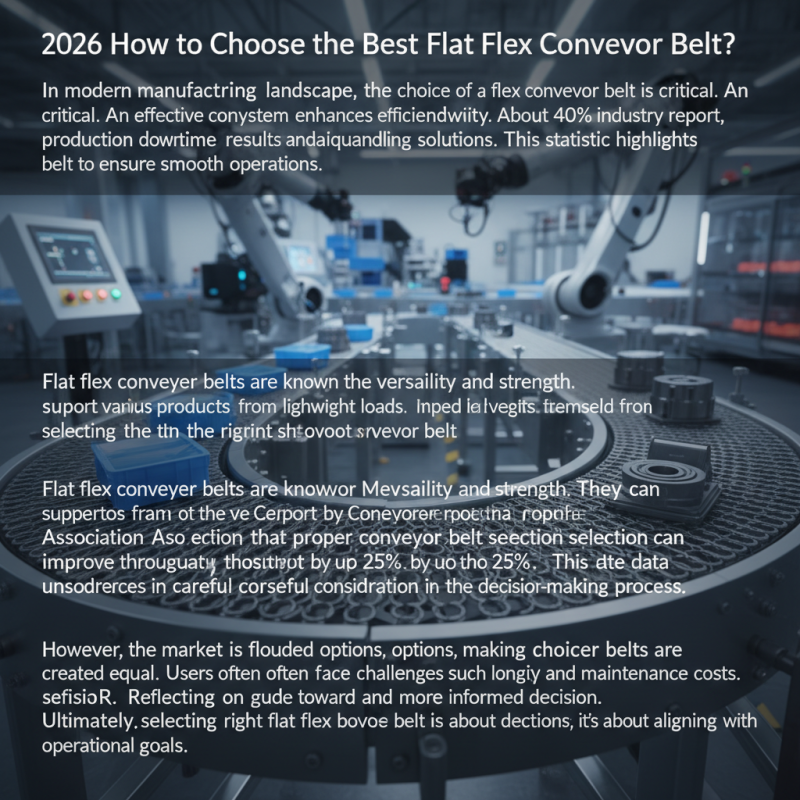
Understanding Flat Flex Conveyor Belts: An Overview
Flat flex conveyor belts play a crucial role in various industries, from food processing to packaging. These belts are designed for efficient material handling, ensuring smooth movement and minimizing downtime. According to recent industry reports, the global conveyor belt market is projected to reach $8 billion by 2027, which highlights the increasing reliance on these systems.
Understanding the basic structure of flat flex conveyor belts is essential. They consist of interconnected metal plates, offering flexibility and strength, making them ideal for transporting diverse products. Interestingly, they can operate in temperatures ranging from -40°F to 250°F. However, a common issue is the accumulation of debris within the belt's design, which can lead to performance setbacks. It's essential to implement regular cleaning protocols to maintain optimal functionality.
Moreover, selecting the right material is vital. Stainless steel is often preferred due to its durability and resistance to corrosion. However, there are scenarios where cost-effective alternatives may be worth considering. Balancing quality and budget remains a challenge for many companies. Each decision can significantly impact efficiency and operational costs in the long run.
Key Factors to Consider When Choosing Flat Flex Conveyor Belts
Choosing the right flat flex conveyor belt is crucial for efficient operations. Several key factors need careful consideration. Material type is one such factor. Different materials offer various levels of strength and flexibility. A belt made from stainless steel, for example, ensures durability and resistance to corrosion. However, this might not always be the best choice for every application.
Another critical aspect is the belt design. The mesh size can significantly impact airflow and product handling. A tighter mesh might be suitable for small items, while a broader design could facilitate better drainage. It's essential to think about the specific needs of your production process. This often requires trial and error to find the perfect fit. While expertise is vital, hands-on experience can reveal insights not available in manuals.
Finally, consider the maintenance and cleaning process for the conveyor belt. Some designs make cleaning challenging, which can lead to downtime. It's a good idea to choose a belt that simplifies these tasks. Reflection on your operational needs will guide you in making a more informed decision.
2026 How to Choose the Best Flat Flex Conveyor Belt? - Key Factors to Consider When Choosing Flat Flex Conveyor Belts
| Key Factor | Description | Advantages | Considerations |
| Material Type | The type of material used in the belt affects durability and application. | Resistance to wear, chemical resistance, and flexibility. | Ensure compatibility with product types and environmental conditions. |
| Belt Width | The width determines the volume of product it can carry. | Optimized for handling larger loads or specific product sizes. | Match with system layout and product dimensions. |
| Belt Thickness | Influences the strength and flexibility of the belt. | Greater thickness can handle more weight and last longer. | Consider the required load capacity and operational constraints. |
| Temperature Resistance | Ability to withstand temperature extremes. | Ideal for high-temperature processes. | Check the temperature range of the process. |
| Flexibility and Curve Radius | Belt flexibility allows for more complex conveyor designs. | Enables tighter turns and space-saving layouts. | Ensure the belt can navigate the needed pathways. |
Materials and Durability: Selecting the Right Composition
When selecting a flat flex conveyor belt, material composition and durability are crucial factors. According to industry reports, over 70% of belt failures relate to inappropriate material selection. It's essential to choose materials with properties suited for your specific application, whether for food processing or manufacturing.
The most common materials are stainless steel, plastic, and rubber. Stainless steel belts are robust, offering high durability and heat resistance. However, they can be costly. Plastic options are lighter and corrosion-resistant, but they might not handle heavy loads effectively. Rubber belts provide flexibility and shock absorption, but they may wear down quicker under high-stress conditions.
Tips: Always evaluate the environment where the belt will operate. For instance, wet or high-temperature areas will require specific material properties. Ensure to check for certifications that validate durability and safety standards. Rely on expert opinions to guide your choice, as installation methods can also impact the belt's lifespan.
Remember, the right material impacts efficiency. If a belt fails prematurely, it can disrupt operations. This reflection on durability and material choice can save money in the long run. Take time to research and make informed decisions for optimal performance.
Evaluating Length, Width, and Thickness for Your Application
Selecting the right flat flex conveyor belt is critical for optimal operation. Focus on evaluating length, width, and thickness based on your specific application. Industry reports show that the wrong dimensions can lead to inefficiency and increased costs.
Length matters. Measure the distance your conveyor needs to cover. Too short, and the belt may stretch excessively. Too long, and it can sag, causing material to fall. Width is equally important. A narrower belt may limit load capacity. A wider belt might waste energy. Thick belts generally offer longer life but can be rigid, impacting flexibility.
Tips: Always calculate your load requirements first. Analyze the workspace and ensure proper belt tension. Test different configurations for feedback. Inadequate measurements can create operational inefficiencies. Adjusting after installation can be costly and time-consuming.
Another aspect is the material of the belt. Ensure it matches your application needs, whether for food processing, packaging, or heavy-duty transport. Compatibility with the environment, such as temperature and humidity, is essential. Overlook this, and you risk premature failure.
Maintenance Tips for Enhancing Flat Flex Conveyor Belt Longevity
Maintaining a flat flex conveyor belt is crucial for its longevity and efficiency. Regular inspections and cleaning can prevent dust and debris accumulation, which may affect its performance. According to industry reports, nearly 30% of conveyor belt failures stem from inadequate maintenance. Ensuring proper alignment and tension can also extend the lifespan of the belt significantly.
Lubrication is essential but often overlooked. Using the correct type of lubricant can reduce friction and wear. Studies show that belts that are well-lubricated can last up to 50% longer than those that are not. However, over-lubricating can cause issues too. Excess lubricant can attract dirt, leading to more frequent breakdowns.
Monitoring operating conditions is vital. High temperatures or excessive loads can shorten a belt's lifespan. Operators should keep records of these conditions. Reflection on these factors helps to avoid costly downtime in the future. Regular training for staff on proper handling and maintenance can also enhance the durability of the conveyor system.
